The SABFA program played a foundational role in shaping my entrepreneurial journey. It not only inspired the idea of venturing into oyster mushroom production but also equipped me with the knowledge to refine the concept. Through the program, I conducted a feasibility study focused on Zambia and developed an initial plan outlining how the business could be established and operated.
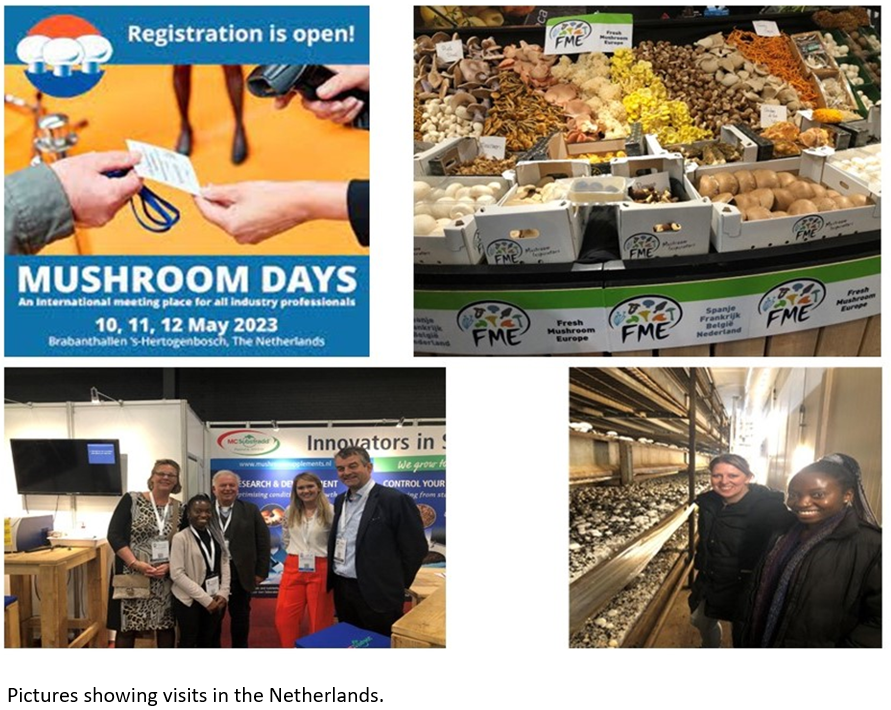
As part of my exposure, I attended a mushroom industry event in Den Bosch, facilitated by Wim Joosten, where different players in the value chain presented their work. I also had the opportunity to visit a female Dutch mushroom farmer, whose insights further enriched my understanding of the practical aspects of mushroom farming.
Motivated to contextualize this knowledge within Zambia, I aligned my master’s thesis with the study of mushroom farming in the local context. My research focused on assessing the feasibility of mushroom farming as a livelihood strategy for female small-scale farmers in Katete District, Eastern Zambia. The findings indicated that mushroom farming is not only highly feasible and profitable but can also be successfully implemented on a small scale, particularly among women farmers.
To strengthen my practical skills, I later attended a hands-on training in oyster mushroom production at the Mushroom Training and Resource Centre (MTRC) in Kabale, Uganda, in November 2023, with support from SABFA. Following this training, I received a start-up loan of €500, which enabled me to acquire essential equipment and begin operations.
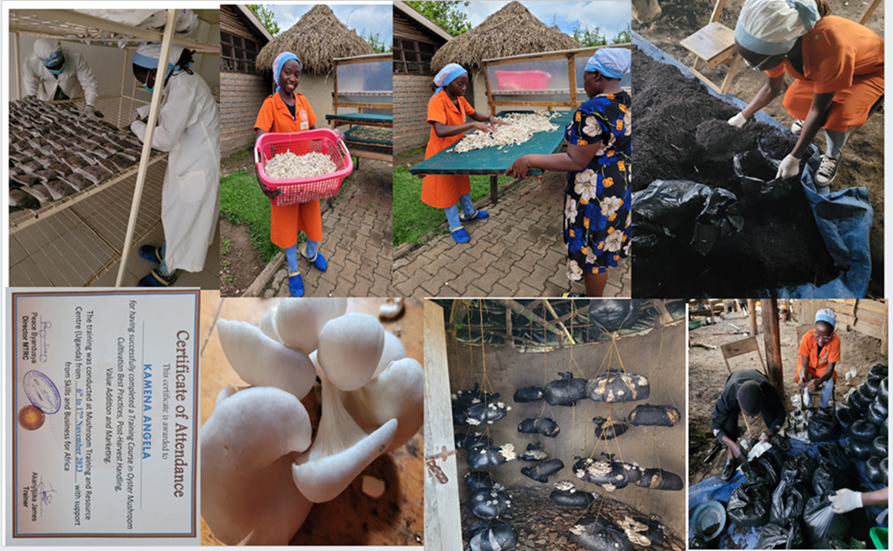
Pictures showing activities at the mushroom training Centre.
Preparations to establish the business began in February 2023, and Muweme Mushroom Solutions was officially registered in April 2024 under the Office of the Registrar of Companies and Business Names in Zambia. The name “Muweme,” derived from a local Zambian language, means “great, good, or nice”—a reflection of the quality, taste, and overall experience I aim to deliver through my mushrooms.
My first production cycle, which lasted three months, yielded 14 kilograms. Throughout this process, particular attention was given to ventilation, humidity control, and maintaining a clean growing environment to prevent contamination. The harvest was of good quality and provided a strong foundation for scaling up production
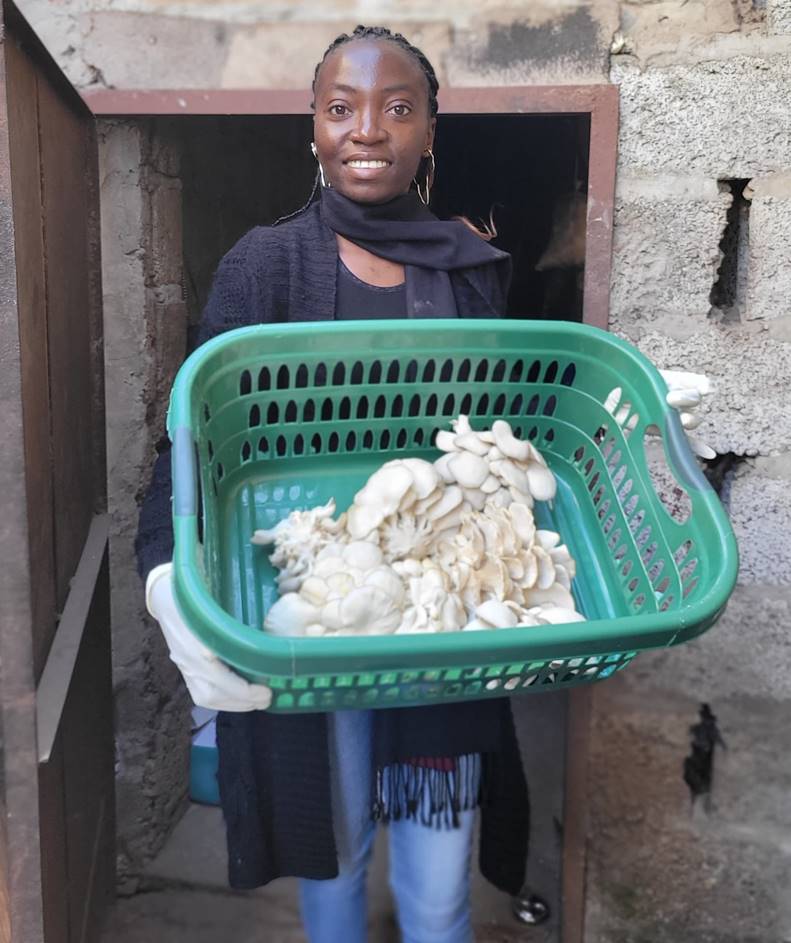
A picture of my very first harvest.